
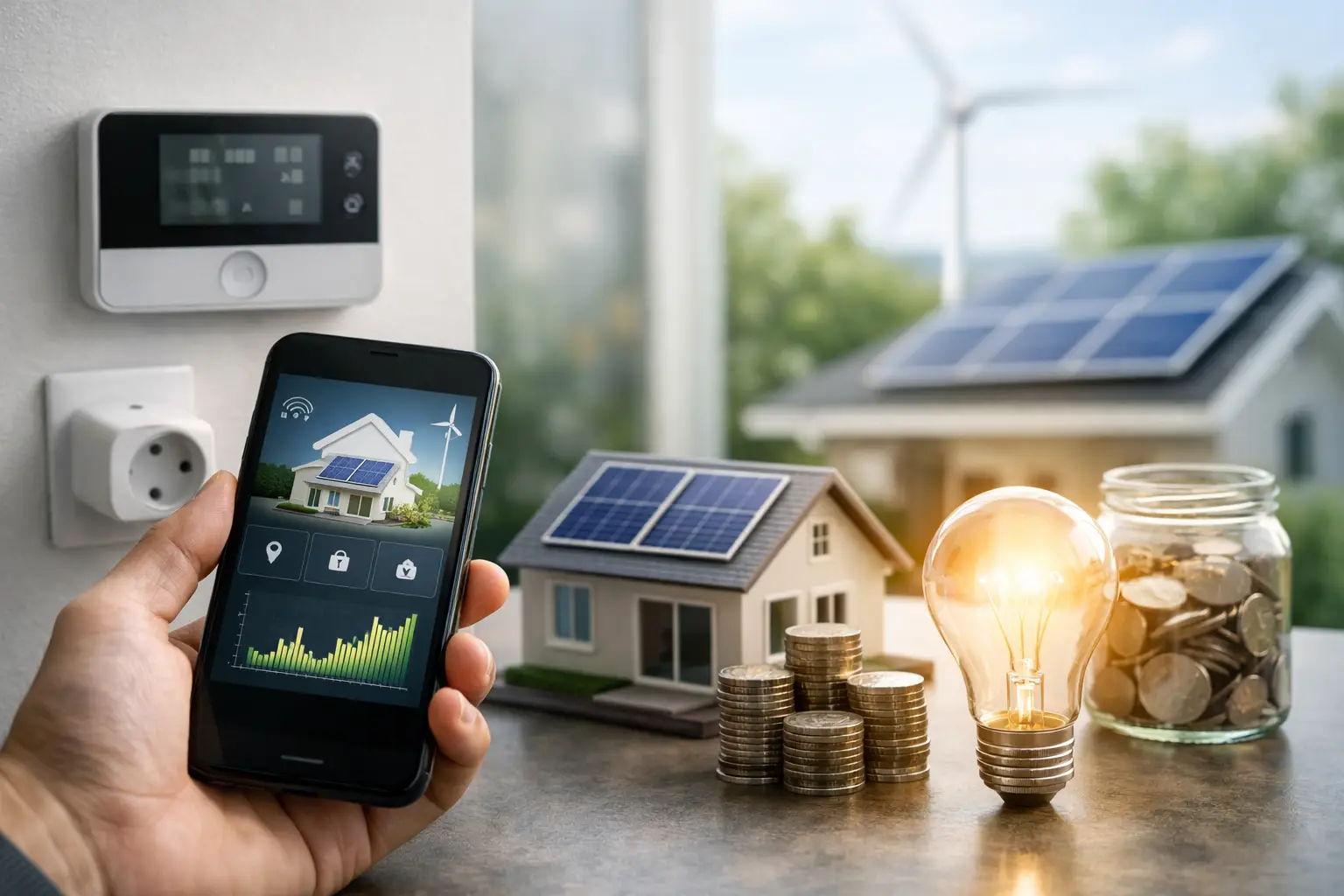
Your thermostat might be smart. Your lights might run on schedules. Your plugs might shut off from an app. And your electric bill can still be higher than it should be.
That is the gap with smart home energy optimization. Buying connected devices is one thing. Getting them to reduce your monthly costs in a real, repeatable way is something else. The goal is not to build a futuristic home. It is to spend less on electricity without turning energy management into a second job.
What smart home energy optimization actually means
Smart home energy optimization is the process of using connected devices, automation, and better rate decisions to reduce wasted electricity and lower your bill. The key word is optimization, not just monitoring.
A lot of households can already see their usage. Fewer households actually change what happens after they see it. If a smart device gives you more data but does not help you use less energy or pay a better rate, the savings are limited.
That is why the strongest results usually come from combining two things. First, you reduce unnecessary usage inside the home. Second, you make sure you are not overpaying for the electricity you do use. Both matter. Cutting waste helps, but paying too much for every kilowatt-hour can cancel out the benefit.
Where most energy waste happens
Most homes do not waste energy in dramatic ways. It is usually the small, constant stuff. Heating and cooling run longer than needed. Lights stay on in empty rooms. Devices draw power when nobody is using them. Appliances run at expensive times if you are on a time-based rate.
HVAC is usually the biggest factor. A smart thermostat can help, but only if the schedule matches how people actually live. If someone works from home three days a week, a preset “away” schedule may be wrong half the time. If a household changes routines often, automation needs to adapt or it stops helping.
Water heaters, laundry, dishwashers, and older refrigerators also add up. So do gaming consoles, TVs, and office equipment that stay on standby around the clock. None of these sounds huge by itself. Together, they can move the bill more than people expect.
The devices that help most
Not every smart device has the same payoff. Some are useful. Some are mostly convenience products with a small energy benefit.
A smart thermostat is often the clearest place to start because heating and cooling are such a large share of home energy use. Smart plugs can also be worthwhile when they control devices with steady standby draw or let you shut off equipment on a schedule. Smart lighting can save money, especially if your household tends to leave lights on, but the savings are usually smaller than people hope if you already use LED bulbs.
Smart appliances can help if they shift use to lower-cost hours, but they are not always the fastest path to savings. If replacing an appliance means spending a lot upfront to save a little each month, the payback can take too long. For most homes, good automation beats expensive upgrades.
Smart home energy optimization works best when it is automatic
The biggest mistake people make is setting up a smart home that still depends on constant attention. If you have to check three apps, adjust five schedules, and remember seasonal changes, it stops being practical fast.
The best smart home energy optimization happens in the background. Your thermostat adjusts based on occupancy. Your lights turn off when rooms are empty. Your plugs cut standby loads overnight. Your high-use devices run during cheaper windows when your rate plan supports that strategy.
That last part matters more than many people realize. You can run a more efficient home and still miss meaningful savings if your electricity supply rate is not competitive. Home automation reduces usage. Rate optimization reduces what you pay for the usage that remains. They are different levers, and both affect the bill.
The missing piece: your electricity rate
This is where smart home conversations often get incomplete. People talk about devices because devices are visible. But for households in deregulated markets, supplier choice can have a direct impact on monthly cost without changing a single appliance.
If your contract expires and rolls onto a worse rate, your smart home setup does not protect you from that. If a better supplier plan is available and you do not switch, efficiency alone will not fully solve the problem.
That is why a practical energy-saving strategy looks at both sides of the equation. Use less where it makes sense. Pay less whenever possible. For many households, the second piece is easier to overlook because rate shopping is tedious. Plans change, terms vary, and keeping up with expiration dates is the kind of task people postpone until after they have already overpaid.
A service like Pylon fits here because it automates supplier monitoring and switching instead of asking you to keep track of the market yourself. That matters if your goal is lower bills with less effort, not more dashboards.
How to make smart home energy optimization worth it
Start with your biggest cost centers, not the most interesting gadgets. In most homes, that means HVAC first, then major appliances and always-on electronics, then lighting and smaller loads.
Look at your actual bill before you buy anything. If supply charges are high, rate optimization may create savings faster than adding another device. If your usage spikes in summer or winter, climate control should be the first area you tighten up. If your home is already efficient but your supplier rate is poor, your next dollar of savings may come from switching plans rather than changing hardware.
It also helps to be realistic about behavior. A perfectly programmed house on paper does not save money if people override it constantly. Good automation should fit the household, not fight it. The simpler the setup, the more likely it is to keep working.
What to avoid
Some smart home upgrades look efficient but do not move the bill much. Others save money so slowly that the upfront cost is hard to justify.
Be careful with products that promise full-home savings without showing where those savings actually come from. Watch out for overlapping devices that do the same job in different apps. And avoid building a system that only one person in the house understands. If the setup is too complicated, it usually gets ignored.
Also remember that optimization is not the same in every home. Renters may not be able to change thermostats or install hardwired devices. Older homes may have limits that make certain automations less useful. Families with irregular schedules need more flexible rules than households with fixed routines. The right setup depends on your space, your utility plan, and how you live.
A better way to think about savings
The most useful definition of a smart home is not a home with the most devices. It is a home that costs less to run without asking for constant work.
That is a better standard because it keeps the focus where it belongs: on the monthly bill. If a device is impressive but does not lower costs, it may still be fun, but it is not solving the core problem. If a service reduces what you pay and removes a recurring task, that is real value.
For most people, the winning formula is simple. Automate the obvious energy waste inside the home. Make sure your electricity rate is still competitive. Then let both systems do their job quietly.
Smart home energy optimization does not need to be complicated to be effective. It just needs to reduce waste, reduce overpaying, and keep doing both next month too.
If your setup saves energy but still leaves money on the table, it is not finished. The best systems are the ones you barely notice – except when the bill shows up lower.