
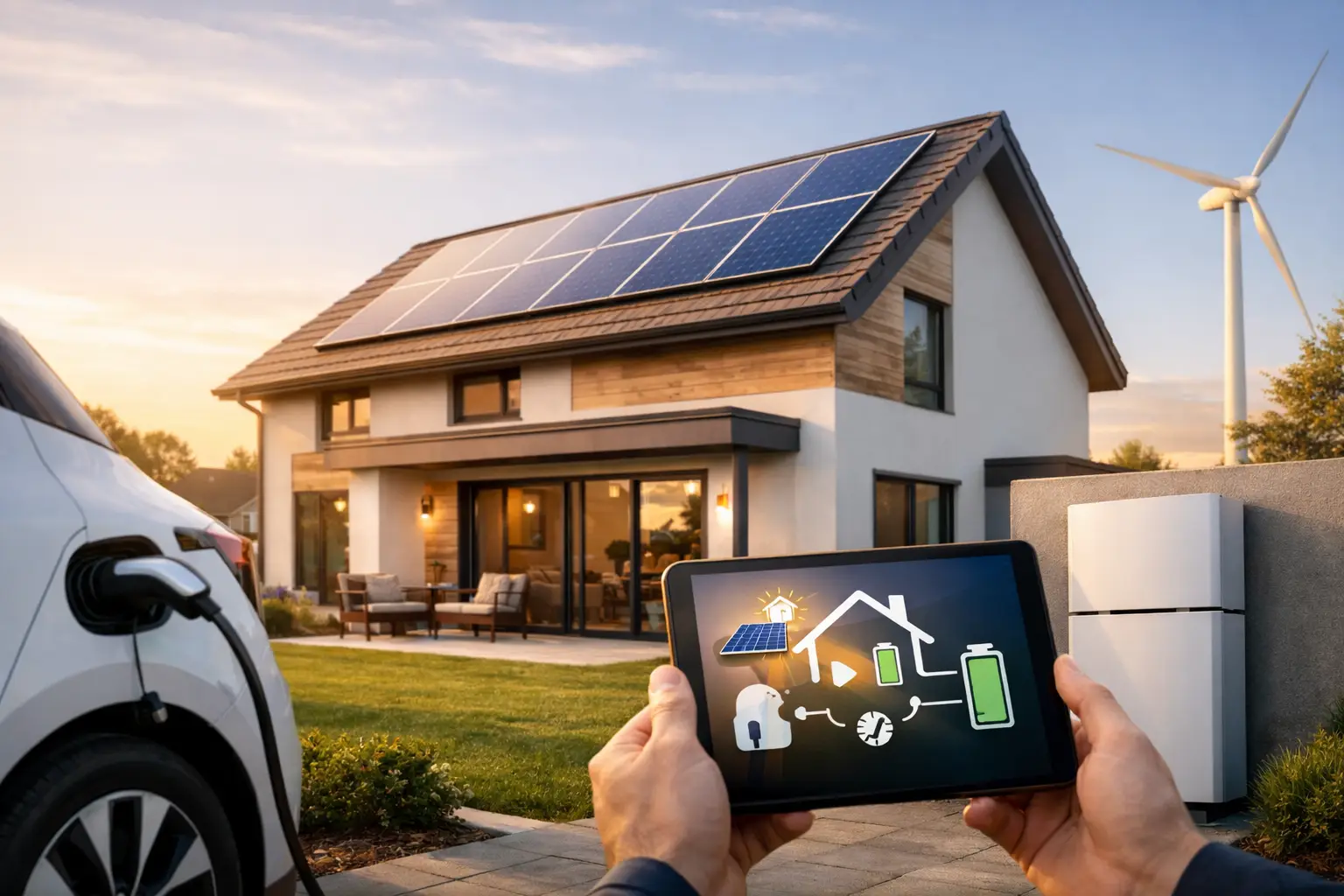
Most people do not want to think about electricity plans more than once a year. The problem is that the future of home energy savings is heading in the opposite direction of old-school bill management. Rates change, contract terms expire, market conditions shift, and the cheapest option this season may not be the cheapest one next season. For households trying to keep monthly costs down, that means saving money on energy is becoming less about one smart choice and more about having a smarter system.
What the future of home energy savings really looks like
For years, home energy savings was framed as a hardware problem. Add insulation. Replace windows. Buy a smart thermostat. Upgrade appliances. Those things can help, and for some homes they make a big difference. But they also cost money upfront, and not every household can justify a large purchase just to lower a utility bill over time.
That is why the future of home energy savings is increasingly about optimization, not just equipment. In many deregulated electricity markets, one of the biggest savings opportunities is not hidden in the walls of your house. It is in the rate you are paying for power.
This matters because two neighbors with nearly identical usage can end up with very different monthly bills. One may be on a competitive supply plan. The other may be paying a higher default rate or sitting on an expired contract that quietly rolled into a less favorable price. Same home. Same habits. Different cost.
That shift changes the conversation. Saving energy is still useful. Saving money is what most households actually feel.
Lower bills will come from automation, not more chores
There was a time when finding a better electricity rate meant doing the work yourself. You had to visit state comparison sites, sort through supplier offers, compare fixed and variable pricing, read term lengths, watch for fees, and then remember to do it all again when your contract ended. Most people understandably stopped before they started.
The next phase is obvious. More of this process will be automated.
That is the real direction of home energy savings for everyday consumers. Not more dashboards. Not more homework. Not more alerts you ignore. Just fewer expensive default decisions.
Automation works because energy pricing is not static. A plan that looks good today may not be the best one six months from now. If savings depend on repeated monitoring, then manual effort becomes the bottleneck. Consumers do not need another task. They need something that keeps working after sign-up.
This is where technology can outperform good intentions. A household might mean to review its supplier options every time rates shift, but most do not. Life gets in the way. Automation closes that gap.
The future of home energy savings is more personalized
Not every household should make the same energy decision. A renter in an apartment has different options than a homeowner in a single-family house. A family with high summer air conditioning use may value a different plan structure than someone with flatter usage throughout the year. A person planning to move in four months should think differently about contract length than someone staying put for five years.
That is another reason the market is moving toward smarter energy services. Generic advice only goes so far. Personalized recommendations based on location, utility setup, and contract timing are more useful because they reflect how people actually pay for electricity.
There is a trade-off here. Personalization can sound complicated if it turns into another stream of settings, comparisons, and decisions. The better version is invisible. Good energy technology should make better choices in the background and keep the customer focused on the result: a lower bill.
Hardware will still matter, but it will not be the whole story
Smart thermostats, efficient appliances, better insulation, and battery storage will keep getting better. Over time, some homes will benefit from a more connected setup where devices respond to price signals, weather, and grid demand. That is real progress.
But there is a practical limit for many households. Major efficiency upgrades can be expensive. Some renters cannot make them at all. Even homeowners who can afford them may take years to fully recover the cost.
That is why the future is not a choice between efficiency and rate optimization. It is both. The households that save the most will often combine moderate usage control with smarter supply decisions.
If you can lower consumption and lower the price you pay per kilowatt-hour, the savings stack. If you only focus on one side, you may leave money on the table.
Why market complexity creates a bigger opening for savings tools
Energy markets are not getting simpler for the average customer. In competitive states, supply plans can vary by price, term length, renewable content, promotional structure, and renewal conditions. Even when information is technically public, it is not always easy to compare in a way that fits real life.
That complexity creates an opening for companies built around one outcome: lower bills with less effort. It is the same pattern consumers have already accepted in other categories. People use tools to track subscriptions, automate investing, and compare insurance pricing because repeating those tasks manually is tedious and easy to put off.
Electricity is heading in the same direction. The winning services will not ask consumers to become energy experts. They will remove the need for expertise in the first place.
For households in states where supplier choice exists, that can be one of the clearest paths to immediate savings. And unlike a major home upgrade, it does not require construction, financing, or waiting months for payoff.
What consumers should expect from the next generation of energy services
The best energy-saving services will feel boring in the best possible way. They will not turn bill reduction into a hobby. They will not bury users in technical language. They will quietly monitor opportunities, act when it makes sense, and make savings easier to keep.
That does not mean every automated option will be equally good. Consumers should still care about transparency. They should understand whether a service is free, how it decides when to switch, and whether it is built for ongoing optimization rather than a one-time recommendation.
They should also expect realistic claims. No service can guarantee the exact same result for every home, because energy usage, market rates, and available plans differ by location and timing. The honest message is not that everyone will save the same amount. It is that households should not have to overpay just because the process is annoying.
That is a much more useful promise.
The future of home energy savings will reward consistency
One of the biggest mistakes in household budgeting is treating recurring bills as fixed when they are actually movable. Electricity costs may feel non-negotiable because you need power no matter what. But in many markets, the supplier and plan behind that bill can change, and that creates room for savings.
The challenge is consistency. A single good switch may help for a while, but long-term savings usually depend on staying on competitive rates over time. That is why automation is such a strong fit here. It turns a recurring savings opportunity into a recurring process.
This is also where services like Pylon fit the future better than manual comparison shopping. The value is not just finding a lower rate once. It is removing the repeat work that causes people to miss savings again and again.
For budget-conscious households, that matters more than flashy energy tech. The most valuable tool is often the one that reduces a monthly bill without demanding your attention every few months.
What this means for the average household
The future of home energy savings is not about asking people to care more about utilities. It is about building systems that require them to care less while still paying less.
For some households, that will include efficiency upgrades and smarter devices. For many others, the fastest win will come from better electricity plan management. The common thread is simple: the best savings tools will reduce friction.
That is the part worth watching. Not just smarter homes, but smarter bill management. Not just energy efficiency, but cost efficiency. Not just access to choices, but help making them without wasting time.
Lowering an electric bill should not feel like a side job, and the services that understand that are the ones shaping what comes next.