
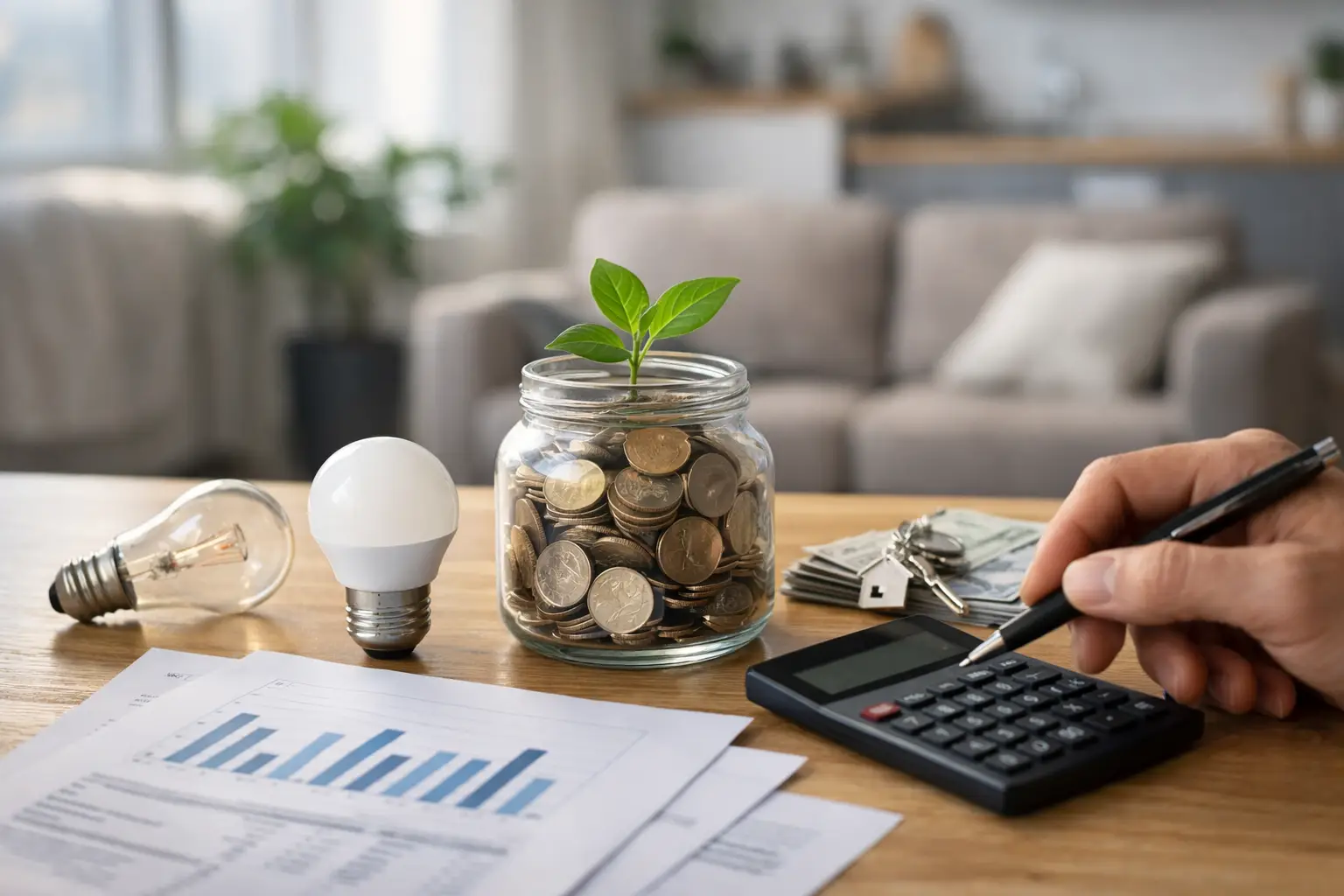
A $25 drop in a monthly power bill does not sound dramatic until you multiply it by 12. For a renter trying to keep housing costs under control, one solid apartment utility savings example can make the math feel a lot more worth paying attention to.
Most renters are not wasting money because they are careless. They are usually paying too much because utility costs are hard to compare, electricity rates change, and small habits get expensive over time. The good news is that apartment savings do not always come from big upgrades or long checklists. Sometimes the biggest win is simply paying a better electricity rate and cutting a few expensive patterns.
An apartment utility savings example with real numbers
Let’s use a realistic one-bedroom apartment in a competitive electricity market. The renter lives alone, works from home two days a week, runs air conditioning in summer, and pays their own electric bill. Water and trash are covered by the building, so electricity is the main variable utility.
Before making any changes, their monthly electricity use averages 650 kWh in warmer months and 450 kWh in milder months. Their supply rate is 15.5 cents per kWh. With delivery charges and taxes folded into the full bill, the monthly total lands around $118 in summer and $82 in shoulder seasons.
Now assume two things happen. First, they switch to a lower electricity supply rate, dropping from 15.5 cents to 11.9 cents per kWh. Second, they make a few basic behavior changes – setting the thermostat 2 degrees higher when away, washing clothes in cold water, and stopping overnight use of a second old mini fridge.
Those changes reduce usage by about 70 kWh per month on average and lower the rate paid on the remaining usage. The revised bill looks more like $88 in summer and $63 in milder months.
That means the renter saves about $30 a month in summer and $19 a month in other months. Across a year, that is roughly $288 to $320 in savings, depending on weather and usage.
That is the point of a good apartment utility savings example. You do not need a dramatic home renovation. You need a few meaningful changes that stack.
Where the savings actually came from
In this example, the biggest savings did not come from using less electricity. They came from paying less for each unit of electricity.
That matters because many renters focus only on consumption. They unplug chargers, turn off lights, and buy smart bulbs, which can help. But if the rate itself is high, those efforts only go so far. In many states, renters can choose a supplier, but the process is annoying enough that most people never revisit it once service starts.
The second layer of savings came from usage reductions, but only the practical kind. There was no full apartment retrofit, no expensive smart home package, and no landlord approval battle. Just a few routine changes that lowered waste.
This is why utility savings often depend on two separate levers. One is rate optimization. The other is usage control. If you only pull one, you leave money on the table.
What changes make the biggest difference in an apartment
Square footage matters, but not as much as people think. In apartments, the biggest bill drivers are usually air conditioning, electric heat if you have it, water heating if it is individually metered, laundry habits, and older appliances.
Lighting matters less than it used to, especially if your apartment already has LED bulbs. Leaving lights on all day is not great, but it usually is not the reason a bill jumped by $40. A window AC unit running for hours, a portable heater, or a high supply rate is much more likely.
For most renters, the best savings moves are the ones that do not require permission from a landlord. Adjusting thermostat settings, changing laundry habits, using blinds to block afternoon heat, and reviewing the electricity rate can all happen quickly.
If your apartment has an old fridge, poor insulation, or drafty windows, the building may be part of the problem. That is where savings become less predictable. You can still lower costs, but there is a ceiling on what habits alone can fix.
A closer look at the monthly math
Here is a more detailed version of the same apartment utility savings example.
The renter starts with 550 kWh of monthly average usage over the year. At a supply rate of 15.5 cents, supply costs alone are about $85.25 a month. Add delivery and other charges, and the all-in monthly bill lands near $95 on average, though summer spikes push it higher.
After switching to 11.9 cents, that same 550 kWh would cost $65.45 on the supply side. Then assume the renter cuts usage to 480 kWh. At the lower rate, supply falls to about $57.12. Delivery charges will still apply, so the full bill does not drop dollar for dollar, but the all-in monthly average might move from about $95 down to around $71 to $76.
That is a realistic monthly savings range of $19 to $24, or around $228 to $288 a year.
If the renter uses more electricity than average – maybe they are home all day, run stronger AC, or live in a poorly insulated unit – the savings can be higher. If they already use very little power, the upside is smaller. That is the trade-off. Bigger bills usually create bigger savings opportunities.
Why renters often miss the easiest savings
Most people treat utility bills like fixed costs. Rent is fixed. Internet feels fixed. Power starts to feel fixed too, even when it is not.
That mindset is expensive. In many deregulated markets, electricity supply rates change regularly. Introductory rates expire. Better offers come and go. Keeping up with that manually is tedious, which is why many people either stay on a default rate or stick with a supplier plan that is no longer competitive.
Renters also tend to underestimate how much friction blocks action. Even a simple savings opportunity gets ignored if it means comparing plans, reading contract terms, and remembering to check again later. A lower bill sounds good. Managing it every few months does not.
That is exactly why automated switching exists. Services like Pylon are built for people who want the savings without turning rate shopping into a recurring chore.
What this means for your own apartment
If your electric bill feels high, start with two questions. First, are you paying a competitive supply rate? Second, what in your apartment is driving the most usage?
Do not assume the answer is your phone charger or your lamps. Look at cooling, heating, laundry, older appliances, and how often you are home. If you live in Texas, Pennsylvania, Illinois, Ohio, New Jersey, New York, or another state with supplier choice, rate review should be near the top of the list.
The reason is simple. Saving 15 percent on usage is helpful. Saving on both usage and rate is better.
It also helps to be realistic. If your landlord includes heat and water, your utility savings options may be narrower. If you pay for electric heat and central air, your opportunity is much larger. Apartments are not all alike, and utility bills are not either.
A better standard for apartment savings
A useful savings goal is not getting your bill as low as possible at any cost. It is reducing what you pay without creating daily hassle.
That is where a lot of energy advice misses the mark. People do not want a second job managing household utilities. They want a bill that makes more sense. A strong apartment utility savings example is not about perfection. It is about showing that a few smart changes, especially around electricity rates, can add up fast.
If your current bill is higher than it should be, the fix may be simpler than you think. Start with the rate. Then trim the obvious waste. The best savings are the ones you actually keep month after month.