
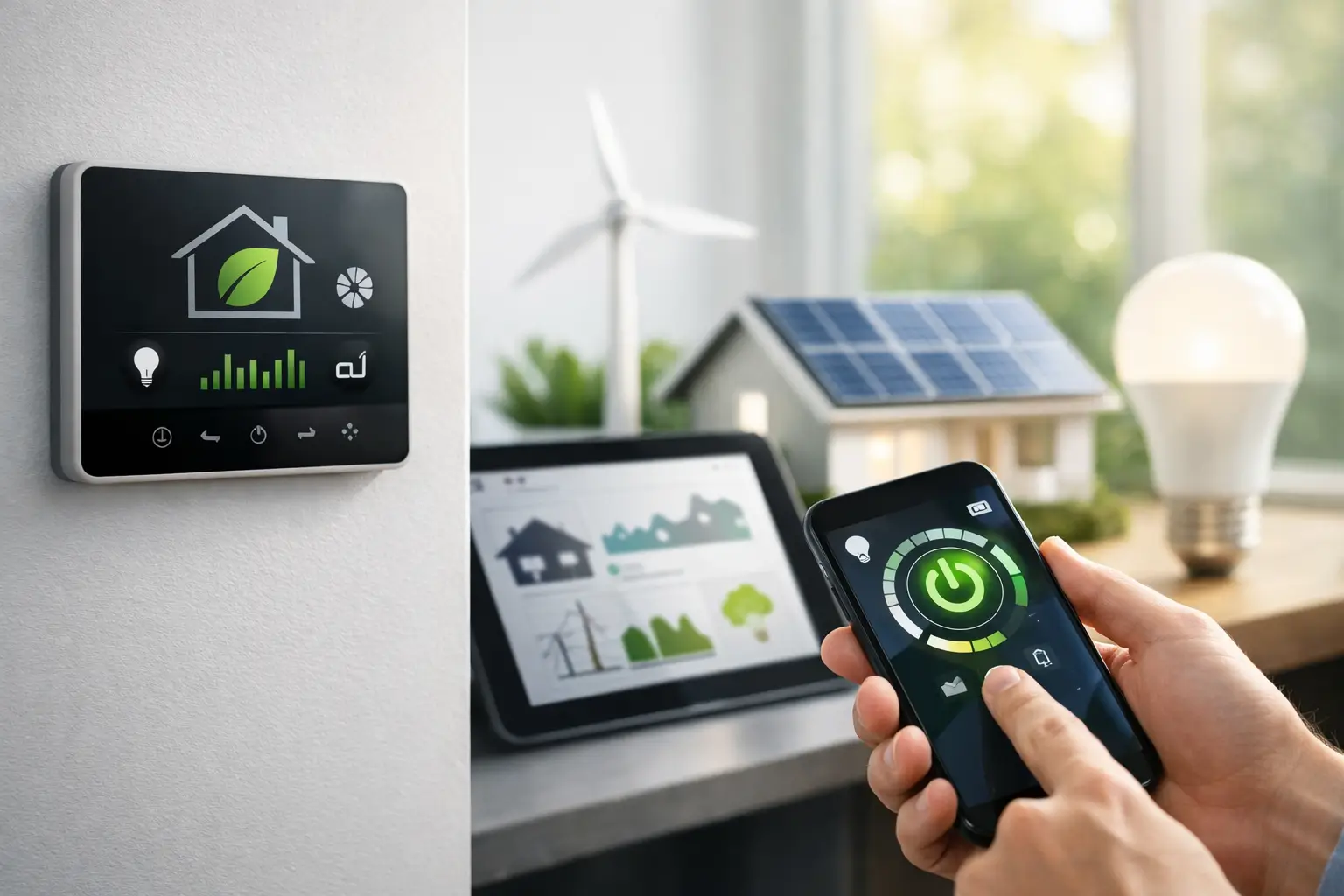
Your electric bill usually goes up for boring reasons: a supplier contract expired, a teaser rate ended, or the cheapest plan changed and nobody had time to notice. That is exactly where an automated energy saving system can make a real difference. Instead of asking you to keep checking rates, deadlines, and plan terms, it handles the work in the background so saving money does not turn into another household chore.
For most people, energy savings sound more complicated than they should. You hear about smart thermostats, insulation upgrades, solar panels, and energy audits. Some of those options are useful. But many households are not looking for a home project. They want a lower bill next month without spending their weekend comparing electricity plans or learning the fine print of retail energy.
What an automated energy saving system actually does
An automated energy saving system is any setup that reduces energy costs with little to no ongoing manual effort from the customer. In some homes, that might mean devices that adjust heating and cooling automatically. In deregulated electricity markets, it can also mean software that tracks supplier offers, watches for contract changes, and moves a customer to a better electricity plan when it makes financial sense.
That distinction matters. People often assume energy savings only come from using less electricity. Sometimes they do. But monthly cost is driven by two separate things: how much energy you use and what rate you pay for it. If your rate is too high, even careful usage habits may not save as much as they should.
For households in states where you can choose your electricity supplier, rate management is one of the clearest cases for automation. Prices change. Terms vary. Introductory offers expire. A plan that looked good six months ago may not be competitive now. Keeping up manually takes time, and most people stop doing it.
Why manual savings efforts usually fall apart
The traditional process is not hard because it is impossible. It is hard because it is annoying.
First, you have to remember to check. Then you have to find a rate comparison site or state marketplace, sort through offers, compare fixed and variable rates, review contract lengths, and watch for cancellation fees or renewal terms. After that, you enroll and hope you remember to do it all again when the term ends.
That system depends on a level of attention most busy households do not have. People are managing rent or mortgage payments, groceries, insurance, childcare, and everything else. Electricity plan shopping keeps getting pushed down the list until a higher bill shows up.
This is where automation earns its value. It removes the need for repeated decision-making. Instead of relying on memory and spare time, the system keeps watch continuously.
How an automated energy saving system lowers bills
The simplest version works like this: you sign up once, the system monitors your electricity options over time, and it switches or recommends a switch when a better opportunity appears. The goal is not to make energy shopping more interesting. The goal is to make it disappear.
For customers in competitive energy markets, that can mean avoiding expensive rollover rates, missing fewer low-rate offers, and spending less time chasing savings manually. Those gains are practical, not theoretical. A few cents per kilowatt-hour can add up over a year, especially during high-usage seasons.
There is also a consistency benefit. Manual shopping often happens only after a bill spikes. Automated monitoring can act earlier, before an unfavorable rate keeps costing you month after month.
That does not mean every switch produces dramatic savings. It depends on your market, current rate, household usage, and supplier availability. But the bigger advantage is that savings opportunities are tracked continuously instead of occasionally.
Automated energy saving system vs. smart home devices
A lot of energy content focuses on gadgets. Smart thermostats, connected plugs, occupancy sensors, and load controllers can all help in the right home. If your HVAC system is running more than it should, a thermostat upgrade might pay off. If your family regularly leaves lights and appliances on, smart controls can trim waste.
But device-based savings and rate-based savings solve different problems. One lowers consumption. The other lowers the price you pay for the electricity you use.
For many households, especially renters or people who do not want to buy hardware, supplier optimization is easier to start with. It usually does not require installation, maintenance, or behavior changes. You do not need to remember new routines. You just need a system that keeps your rate competitive.
That is why an automated service can be a better fit than a home efficiency project for customers who want the fastest path to lower bills. It is not about turning your home into a tech lab. It is about paying less for power with less effort.
Who benefits most from this kind of automation
Households with busy schedules are the obvious fit. If you have meant to compare electricity rates but never got around to it, automation solves the exact problem standing in your way.
It also helps people who are budget-conscious but not interested in becoming energy experts. You should not have to understand every detail of supplier procurement to avoid overpaying. A good system translates complexity into a simpler outcome: lower costs and less work.
Customers in deregulated states tend to benefit the most because they actually have supplier choice. In those markets, staying on an outdated plan can cost real money. An automated service keeps watching the market even when you are not.
Renters can benefit too, provided they are responsible for their electricity supply. You do not need to own the building to care about what shows up on the utility bill.
What to look for in an automated energy saving system
Not all automation is equally useful. The best systems are built around one clear result: saving money without creating more work.
That means the process should be easy to start, easy to understand, and low maintenance after signup. If a service still expects you to compare plans constantly, track deadlines yourself, or decode supplier fine print, it is not really solving the problem.
Transparency matters too. You should know what the system is doing on your behalf, what kinds of plans it considers, and whether there are any limits based on your state or utility. Automation should reduce confusion, not hide it.
It also helps to be realistic. No service can guarantee the same savings for every household because markets move and usage varies. What a strong service can do is remove the repeated manual work that causes people to miss savings in the first place.
The trade-offs to understand
Automation is powerful, but it is still worth knowing where the trade-offs are.
First, some people prefer full manual control over every supplier decision. If you enjoy rate shopping and want to review every option yourself, automation may feel unnecessary. Most customers, though, are not looking for another recurring task.
Second, savings depend on market structure. If you live in a fully regulated area without supplier choice, this kind of system may not apply in the same way. Other automated tools, like thermostat scheduling, may be more relevant there.
Third, the cheapest advertised rate is not always the best deal once terms are considered. That is another reason a thoughtful automated process matters. Good automation is not just chasing a number. It is evaluating whether a plan is likely to stay beneficial over time.
Why this model fits how people actually live
The strongest case for automation is simple: people want savings, but they do not want another system to manage. Household admin already eats enough time. Any service that depends on constant attention will lose most customers, even if the math is good.
An automated energy saving system works because it matches real behavior. People sign up once for streaming, autopay, and account alerts because convenience matters. Energy savings should work the same way.
That is also why services like Pylon make sense for residential customers. The value is not in turning electricity shopping into a hobby. The value is in removing it from your to-do list while still reducing what you pay.
If your current approach to saving on electricity is waiting until the bill gets bad enough to notice, automation is probably the upgrade that matters most. The best money-saving tools are often the ones you do not have to think about twice.