
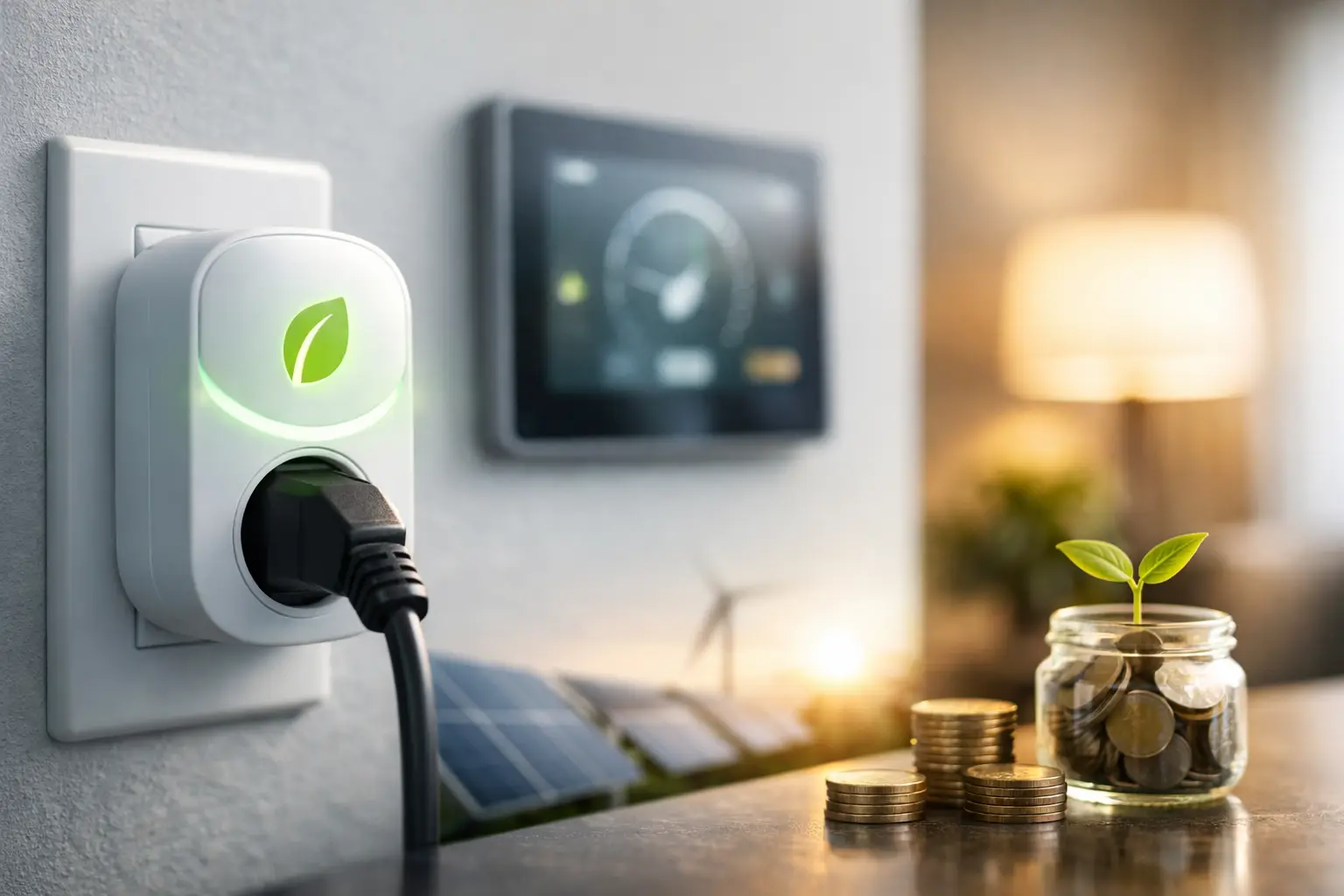
Your electric bill usually does not jump because you suddenly used power in some dramatic new way. More often, it rises because the rate you pay changed, a contract expired, or a better plan came and went while you were busy doing everything else. That is why the idea of an automatic energy saver matters. For most households, saving on electricity is not about becoming an energy expert. It is about removing the need to constantly watch the market.
What an automatic energy saver actually means
The phrase sounds like a gadget. People hear it and think of a box you plug into the wall or a device that somehow smooths out your usage. In real life, an automatic energy saver can mean something much simpler and much more useful. It is any system that reduces your energy costs with minimal ongoing effort from you.
That can include smart thermostats, automated home controls, or billing tools that help reduce waste. But for many households in states with retail electricity choice, the biggest savings opportunity is not changing how power moves through your home. It is changing how you buy that power.
If you live in a deregulated market, your supplier options can affect your monthly bill just as much as your habits do. The challenge is that rates move, terms vary, and low prices often come with expiration dates. A true automatic energy saver handles that complexity for you instead of asking you to monitor it yourself.
Why manual energy shopping usually fails
In theory, shopping for a better electricity supplier sounds easy. In practice, it is one of those tasks that never quite gets done.
You have to check your state marketplace or comparison board, sort through plans, compare rates, read term lengths, watch for cancellation fees, and understand whether a low introductory price is actually a good deal over time. Then you have to remember to do it all again when the plan ends.
Most people do not skip this because they do not care. They skip it because it is repetitive, easy to forget, and not worth turning into a monthly hobby. That is where automation starts to make sense. Instead of asking households to act like rate analysts, an automatic energy saver takes over the monitoring and switching process.
The most effective kind of automatic energy saver for many homes
For households in states where you can choose your electricity supplier, the most effective automatic energy saver is often an automated supplier switching service.
This type of service tracks available electricity offers, compares them against your current plan, and moves you to a lower-cost option when it makes financial sense. The point is not to teach you the entire energy market. The point is to keep you from overpaying because your current rate drifted up while you were not looking.
That is a different promise than a traditional energy audit or a home upgrade project. You are not replacing insulation, buying new appliances, or changing your daily routine. You are using automation to reduce the price you pay for electricity supply.
For busy households, that matters. Saving $20, $40, or more per month without adding another task to your life is a lot more realistic than trying to optimize every switch, bulb, and thermostat setting by hand.
How an automatic energy saver works in plain English
The basic logic is simple. You sign up once. The service reviews your current electricity setup, watches supplier rates over time, and switches you when a better plan is available under its criteria.
That means you are not checking expiration dates on your contract. You are not trying to remember whether your low rate ends in six months or twelve. You are not comparing twenty plans on a Sunday night after putting it off for three weeks.
The automation does the repetitive part. That is the value.
Services can differ in how aggressive they are about switching, what fees they charge if any, and how they define savings. That is worth understanding before you enroll. But the best versions share one core benefit: they reduce energy shopping from a recurring chore to a background process.
What it does and does not save
An automatic energy saver can reduce what you pay for electricity supply. That is real savings. But it is still useful to be clear about the limits.
It does not usually reduce your total usage by itself unless it is tied to equipment like a thermostat or smart home controls. If your family starts running the AC nonstop or charging an EV every night, your bill can still go up. Lower rates help, but usage still matters.
It also does not make every home save the same amount. Your results depend on where you live, how much power you use, what plan you are on now, and what alternative offers are available in your market. A household stuck on an expensive post-contract rate may see clear savings. Someone already on a competitive fixed plan may see less room for improvement right away.
That is not a flaw. It is just how utility economics work.
When an automatic energy saver makes the most sense
This kind of service fits best when you want lower bills but have zero interest in managing electricity plans yourself.
It is especially useful if you live in Texas, Illinois, Ohio, Pennsylvania, DC, Delaware, New Jersey, Rhode Island, Massachusetts, New Hampshire, New York, or Maine and already have supplier choice. In those markets, paying too much often comes down to inaction rather than lack of options.
It can also be a strong fit for renters. A lot of renters assume meaningful energy savings only come from home upgrades they do not control. But if the utility account is in your name and your area allows supplier choice, rate optimization may be one of the few savings levers you can actually use.
And for homeowners, it pairs well with efficiency upgrades without depending on them. You can weather-strip your doors, upgrade your thermostat, and still benefit from paying a better supply rate.
How to tell if a service is really automatic
Not every company that uses the word automatic means the same thing. Some alert you to better rates but still expect you to do the switching. Others may sign you up for one lower-rate plan but leave you there until you remember to revisit it.
A real automatic energy saver should keep working after enrollment. That means ongoing monitoring, repeat switching when appropriate, and clear communication about what it is doing on your behalf.
It should also be easy to understand. If the service depends on you learning utility pricing rules, checking multiple notices, or stepping in every time a contract changes, it is not saving you much effort.
That is why the strongest offer in this category is simple: register once, then let the system keep looking for ways to lower your supply cost over time. That is the model companies like Pylon are built around.
The trade-offs are worth knowing
Automation is powerful, but it is not magic. Some households want full control and prefer to review every plan themselves. If you enjoy comparing rates and reading terms, manual shopping may work fine for you.
There can also be timing considerations. A lower rate is only attractive if the contract terms make sense. Sometimes the cheapest-looking offer is not the best fit if it has conditions that increase risk later. Good automation accounts for that instead of chasing the lowest number on the page.
The main trade-off is simple: you give up some hands-on control in exchange for less work and more consistency. For most people, that is a good trade. The task gets done, which is more than can be said for most DIY electricity shopping.
Why this matters more now
Power bills have become one of those recurring costs people notice fast. When groceries, insurance, and housing all feel expensive, a utility bill that quietly climbs each month gets harder to ignore.
The problem is not awareness. It is bandwidth. Most households know they should probably check for a better rate. They just do not want another account to manage, another contract to track, or another complicated decision hanging over them.
That is exactly where an automatic energy saver earns its place. It turns a bill people already pay into one they may pay more intelligently, without requiring constant attention.
If your goal is simple – spend less on electricity without turning it into a project – automation is not the extra feature. It is the whole point. The best money-saving systems are the ones you do not have to remember to use.